Transit Visas Solutions for Smoother Travel Routes

International journeys often involve multiple flights, especially when travelers are heading to destinations that do not have direct connections. While connecting flights can provide more route options, they can also introduce additional immigration and documentation requirements. Transit Visas may be one of those requirements, depending on the traveler’s nationality, connecting country, airport, and itinerary. Understanding these requirements early can help travelers create smoother and more organized travel routes.
Planning a connecting journey should involve more than comparing ticket prices and flight times. Travelers should also consider whether they need to pass through immigration, collect baggage, change airports, or remain inside an international transit area. By reviewing these details before booking, travelers can identify potential visa issues and prepare accordingly.
Understand Your Complete Travel Route
The first solution for smoother international travel is to understand the entire route. Travelers should identify every country and airport included between their departure point and final destination.
A route with two or three connections may involve different transit rules at each airport. A traveler should therefore check each transit country rather than assuming that the same conditions apply throughout the journey.
Transit Visas requirements can vary based on nationality and travel circumstances, so researching the complete itinerary is an important first step.
Check Transit Requirements Before Booking
One of the most effective ways to avoid complications is to check visa requirements before purchasing a ticket. Some travelers can transit through certain countries without a visa, while others may require specific authorization.
Official immigration or government websites should be used to confirm the latest rules. Airlines can also provide useful information about connection procedures, but immigration requirements should be verified through authoritative sources.
Checking early gives travelers time to consider alternative routes if the original itinerary creates difficult requirements.
Understand Airside Transit
Airside transit can sometimes allow passengers to connect without formally entering the country. The traveler remains in the designated international transit area and continues to another flight.
However, this arrangement depends on specific conditions. The airport must support the relevant transit process, and the passenger may need to remain airside throughout the connection.
If a traveler needs to pass through immigration, the conditions may change. Understanding the difference between airside and landside transit can help travelers select more suitable routes.
Review Baggage Arrangements
Baggage can significantly affect the simplicity of a connecting journey. If luggage is checked through to the final destination, passengers may be able to remain in the international transit area.
However, some itineraries require passengers to collect baggage and check it in again. This can require passing through immigration and may create additional visa requirements.
Before booking a route, travelers should confirm how baggage will be handled at every connection. This small detail can make a major difference to the overall travel process.
Avoid Unnecessary Airport Changes
Changing airports during a connection can make an itinerary more complicated. A passenger may need to leave the airport, travel through public areas, and enter another airport.
This can create additional entry requirements, even when the traveler is not planning to stay in the country.
When possible, travelers should carefully compare itineraries that require airport changes with routes that allow connections within the same airport. The appropriate choice depends on the traveler's circumstances and applicable rules.
Allow Enough Connection Time
A smooth route requires enough time to complete every necessary procedure. Travelers should consider security checks, immigration, baggage collection, airport transfers, and boarding requirements.
Very short connections can create additional pressure if the first flight is delayed. Longer connections may provide more flexibility, particularly when multiple procedures are involved.
When reviewing an itinerary, travelers should consider the complete connection process rather than relying only on the advertised flight duration.
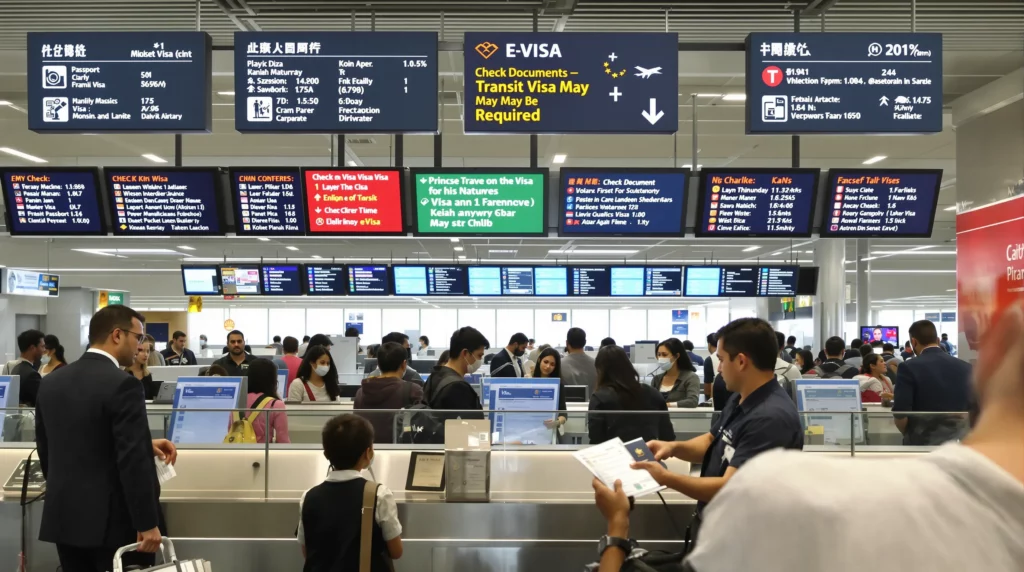
Prepare Transit Documents Early
If Transit Visas are required, travelers should begin preparing the necessary documents as early as possible. Requirements differ by country but may include a valid passport, flight bookings, onward travel evidence, application forms, photographs, and documents related to the final destination.
Always follow the current official checklist because requirements can change.
Early preparation also gives travelers an opportunity to identify missing information and correct errors before submitting an application.
Keep Information Consistent
Consistency across travel documents is essential. Names, passport numbers, travel dates, flight information, and destinations should match the actual itinerary.
Errors or inconsistencies may create unnecessary questions during the application or travel process.
Review every document carefully before submission. If the airline later changes your route, check whether the new itinerary affects your transit requirements.
Check Final Destination Requirements
Transit requirements can sometimes depend on the traveler's final destination. A transit country may require evidence that the passenger is authorized to enter the final country.
Travelers should therefore keep relevant final-destination documents accessible during the journey.
This may include a visa, residence permit, or other required authorization depending on the traveler's circumstances.
Prepare for Itinerary Changes
Flight cancellations, delays, and schedule changes can create new transit situations. A replacement flight might involve a different airport or country, which could introduce different visa requirements.
Travelers should review the new itinerary carefully instead of assuming that their original transit arrangements remain valid.
If there is a significant change, checking official immigration information and contacting the airline can help clarify the next steps.
Keep Important Documents Accessible
Even after completing the necessary preparations, travelers should keep important documents easy to access during connections. Passports, boarding passes, transit permissions, accommodation information, and onward travel details should be organized securely.
Having these documents available can make airport procedures more efficient and reduce the time spent searching through luggage or devices.
Secure digital copies can also be useful where appropriate, provided personal information is protected.
Use Reliable Sources
Transit rules can be complicated, particularly when multiple countries are involved. Official government immigration websites should be the primary source for current visa information.
Airlines and airport authorities can provide additional information about check-in, baggage, terminals, and connection procedures.
General travel websites may help explain concepts, but travelers should verify important requirements through official sources because immigration policies can change.
Consider Professional Guidance for Complex Routes
Some itineraries can be difficult to understand, especially when they involve multiple transit countries, separate tickets, airport changes, or unusual baggage arrangements.
In such situations, qualified travel or immigration professionals may help travelers understand the documentation process. However, travelers should always provide accurate information and verify important requirements through official sources.
Professional guidance should support careful planning rather than replace official immigration information.
Create a Backup Route
A backup option can be useful when a planned route depends on complicated transit requirements. Travelers can research alternative flights or connection points before departure.
Having another possible route in mind does not mean expecting a problem. It simply provides additional flexibility if an airline changes the itinerary or a connection becomes unavailable.
Final Thoughts
Smoother international travel begins with careful route planning. Transit Visas may be required for some passengers depending on nationality, transit country, airport arrangements, baggage procedures, and whether the traveler needs to enter the country during a connection.
By checking requirements before booking, understanding airside transit, reviewing baggage arrangements, avoiding unnecessary airport changes, preparing documents early, and allowing sufficient connection time, travelers can reduce avoidable complications.
A well-organized route provides greater clarity at every stage of the journey. With accurate information and thoughtful preparation, travelers can approach connecting flights with more confidence and make their international travel experience easier to manage.